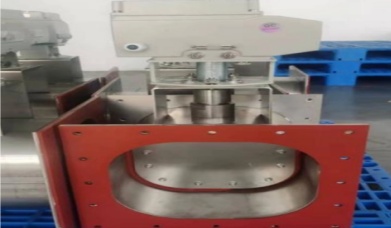
In biosafety facilities, “valve life” is never just about how long a metal body can exist without breaking. A Biosafety Sealed Valve is part of a containment strategy—often installed in HVAC isolation, decontamination pathways, filter housings, or controlled exhaust and supply lines where airtight performance matters. When customers ask us, “What is the life expectancy of a Biosafety Sealed Valve?” they usually mean something more practical: How long will it keep sealing reliably, operating smoothly, and passing verification without becoming a risk or a maintenance headache?
At Shanghai Qualia Biotechnology Co., Ltd., we approach this question the same way most experienced biosafety engineers do: the valve’s life expectancy is best understood as a system lifecycle, not a single number. The valve body and actuator can often last many years, but the sealing elements and wear components define the real service interval. Seals age. Elastomers harden. Particles and chemical agents can degrade gasket materials. Misalignment and poor installation can create early leakage. And after major changes—such as replacement or repairs of ductwork valves or dampers serving containment areas—verification requirements may require the HVAC system to be re-verified and documented.
So, instead of promising an unrealistic “one-size-fits-all” lifespan, this guide explains realistic life expectancy ranges, what drives service life up or down, and how to plan maintenance so your biosafety sealed valve performs reliably for the long term.
First, what counts as a “Biosafety Sealed Valve” in practice?
Across different biosafety projects, “biosafety sealed valve” may refer to isolation valves or airtight dampers used to achieve containment performance—often described as bubble-tight or “airtight isolation” in specification language. These valves/dampers are typically used to isolate filter trains, support decontamination steps, enable safe changeout, or prevent contaminant migration during shutdown and maintenance.
The key performance expectation is not simply flow control—it is reliable sealing under real operating conditions.
Typical life expectancy range: the practical answer
A realistic way to think about life expectancy is to split the valve into “long-life structure” and “wear-life sealing.”
1 Valve body and structure
In many installations, the metal body, blade/disc structure, and frame can remain serviceable for 10–15 years or more when:
corrosion protection is appropriate,
installation is correct,
operating cycles and differential pressure are within design limits,
and seals are replaced as needed.
(Exact life depends on environment and duty cycle; harsh chemical exposure, abrasive particulate, or repeated decon cycles can shorten it.)
2 Seals and soft components
The seal system typically determines the true service interval. Seal deterioration is widely recognized as time- and environment-dependent. For example, manufacturer instructions for bubble-tight damper blade seals explicitly note that seals may deteriorate over time due to aging, wear, and mechanical damage, and that site conditions (grit, chemical agents, radiation exposure in some contexts) can accelerate degradation.
A helpful planning mindset is:
3) Pneumatic sealing systems (where applicable)
Some biosafety containment systems use pneumatic or inflatable sealing concepts in doors and isolation components. In one containment-focused reference, pneumatic seal systems are presented with an expected life range of about 7–10 years with periodic inspection, while mechanical seals are shown with shorter service intervals (around 2–3 years) in comparable containment contexts.
This does not mean every valve uses the same seal technology, but it supports a core reality: seal design and inspection discipline strongly affect lifespan.
What actually determines the service life of a biosafety sealed valve?
1 Duty cycle and operating behavior
How often the valve cycles matters. A valve that closes only during maintenance isolation may last far longer than a valve that cycles daily for system switching or process steps. More cycles generally mean more wear on:
shaft seals,
seating surfaces,
linkages,
actuator components.
2 Differential pressure and airflow dynamics
Higher differential pressure across the blade/disc increases sealing stress and can accelerate wear. Seal materials can also experience higher torque requirements as thickness and stiffness increase—one reason manufacturers note the relationship between seal material properties and operating torque.
3 Environment: humidity, chemicals, and particulate
Biosafety HVAC environments may include:
or corrosive atmospheres in certain process zones.
All of these can shorten seal life and increase maintenance needs.
4 Installation quality
Premature leakage is often installation-driven:
A high-end sealed valve can still fail early if the system installation forces the blade or seal to seat unevenly.
5 Maintenance and verification practices
Containment facilities tend to follow verification discipline. If ductwork valves/dampers serving containment areas are replaced or repaired, it can trigger a need to verify HVAC operation and document performance again.
This operational reality encourages planned replacement rather than waiting for failure.
A practical lifecycle view: what gets replaced and when?
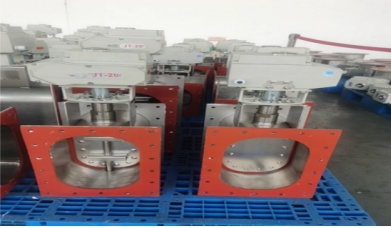
Below is a planning table we often use to help teams think clearly about lifecycle cost and replacement intervals. These are not universal guarantees—your vendor’s technical manual always takes priority—but they reflect typical wear logic in sealed isolation devices.
Component | What it does | Typical life driver | Practical replacement approach |
Valve body / frame | structural containment boundary | corrosion, mechanical damage | long-life; replace only if damaged or corroded |
Blade/disc & linkage | creates isolation action | abrasion, alignment, deformation | inspect during planned downtime |
Blade/seat seal | airtight shutoff | aging, wear, chemicals, grit | replace on condition or scheduled interval |
Shaft seals / external seals | prevent leakage at moving shafts | cycling, heat, aging | replace when leakage or torque changes occur |
Actuator (electric/pneumatic) | drives valve movement | cycle count, environment | service per schedule; replace if performance drifts |
Fasteners & gaskets | sealing interfaces | corrosion, vibration | replace during major service or when disturbed |
Signs a biosafety sealed valve is nearing end of life
In most facilities, the valve rarely “fails suddenly” without warning. Common indicators include:
Seal leakage during verification or local leak testing
Airtight performance is the key metric. If leakage increases, the seal system is usually the first suspect.
Rising operating torque or slow actuation
Stiffer seals, friction changes, or misalignment can increase load. Seal stiffness effects on torque are recognized in damper seal guidance.
Visible seal cracking, compression set, or deformation
This is a direct sign that the elastomer is aging or chemically degraded.
Frequent re-adjustment to maintain shutoff
If operators must repeatedly “tune” the closure to achieve seal, you are often past the optimal service point.
Corrosion or mechanical damage at mating surfaces
Seals cannot compensate for warped frames or damaged seating edges.
How to extend the life expectancy of a biosafety sealed valve
1 Choose seal materials that match the environment
Chemical exposure, humidity, and temperature swings matter. If decontamination chemicals or cleaning agents are used, select seal materials proven compatible with those conditions.
2 Avoid treating a sealed valve as a “set-and-forget” component
Airtight performance depends on seal condition. Seal deterioration over time is expected; it should be monitored.
3 Control particulate and grit in the system
Grit is a seal killer. Where possible, upstream filtration and good housekeeping reduce abrasive wear.
4 Use consistent inspection intervals
If your facility uses containment verification discipline, align valve inspection with your verification schedule. Remember that major changes to valves/dampers may require documented HVAC verification again.
5 Don’t ignore torque changes
A rising torque trend is often an early warning. Addressing it early can prevent seal damage and unplanned shutdowns.
Conclusion
So, what is the life expectancy of a Biosafety Sealed Valve? In practical terms, many valve bodies can remain serviceable for a decade or more, while the seal system is typically the limiting factor and must be inspected and replaced based on aging, wear, environment, and verification results. Seal deterioration over time is expected, and harsh site conditions can accelerate it. And in high-containment environments, replacement or repair of ductwork valves/dampers can trigger requirements to verify and document HVAC operation again, making planned maintenance especially valuable.
If you’re evaluating lifecycle planning, material selection, or maintenance strategy for biosafety sealed valves in containment systems, you can learn more from Shanghai Qualia Biotechnology Co., Ltd. We can share practical guidance based on your operating environment, verification approach, and system configuration—so your sealing performance stays stable over the long term.
FAQ
1) What is the typical life expectancy of a Biosafety Sealed Valve?
The valve body can often last many years, but seals usually define the practical service interval because they age and wear over time.
2) What causes a Biosafety Sealed Valve to wear out early?
Common causes include high cycle frequency, high differential pressure, chemical exposure, grit/particulate, and installation misalignment that prevents even seating.
3) How do I know when seals need replacement?
Rising leakage during testing, visible seal cracking, increased operating torque, or inconsistent shutoff are common indicators that seals are deteriorating.
4) Does replacing a biosafety valve affect facility verification requirements?
In high-containment environments, replacement, repair, or modification of ductwork valves or dampers can be considered a major HVAC change that requires verification and documentation again.


