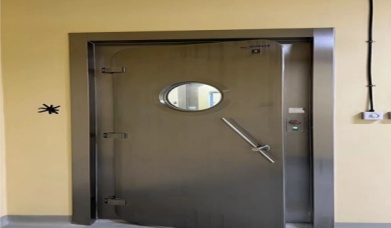
When most people hear “biosafety,” they think about PPE, biosafety cabinets, or strict operating procedures. But in high-containment spaces, the building itself is part of the safety system—and doors are one of the most important “moving parts” in that boundary. A Biosafety Air Tight Door is not a regular door with a stronger lock. It is a specialized barrier designed to help a facility maintain containment by controlling air leakage, supporting pressure differentials, and reducing the risk of unintended airflow between zones.
From our work at Shanghai Qualia Biotechnology Co., Ltd., we see that airtight doors are often introduced when a project moves beyond basic cleanroom thinking and into biosafety zoning—for example, BSL-2 enhanced, BSL-3 suites, animal facilities, vaccine or biologics production areas, and any environment where pressure gradients and controlled airflow are central to risk control. In these scenarios, the door must do more than open and close. It must seal consistently, integrate with interlocks and monitoring, and remain reliable under frequent daily use.
This article explains, in practical terms, what a Biosafety Air Tight Door is used for, where it’s installed, how it works with HVAC pressure control, and what buyers should look for in selection and maintenance.
What Is a Biosafety Air Tight Door
A Biosafety Air Tight Door is a door system engineered to achieve high sealing performance (low air leakage) using structural rigidity, continuous gaskets, controlled compression, and specialized hardware. In many biosafety layouts, it is part of a containment boundary that separates higher-risk spaces from lower-risk spaces.
In higher biosafety levels, access is commonly managed through a sequence of self-closing doors (often two-door entry/anteroom concepts) that help preserve containment when personnel enter or exit.
What Is a Biosafety Air Tight Door Used For
1 Maintaining pressure containment between zones
One of the most common uses is supporting pressure differential control—for example, keeping a containment room under negative pressure relative to adjacent areas, so airflow moves inward rather than outward.
Many BSL-3 design references emphasize maintaining negative pressure and monitoring pressure differentials at barrier doors/spaces to support containment.
2 Supporting directional airflow and contamination control
In biosafety and controlled environments, HVAC systems are designed to create directional airflow: clean → less clean → higher risk. An airtight door reduces uncontrolled air exchange that can weaken that airflow logic.
3 Reducing leakage pathways for aerosols and odor
In facilities handling biological materials, the concern is not only spills. Aerosols, fine particles, and odors can migrate via gaps and pressure-driven leakage. A high-seal door reduces those leakage routes.
4 Enabling safer “airlock” behavior in entry/exit transitions
Airtight doors are frequently used as part of anterooms/airlocks, where only one door opens at a time (interlock) to reduce disturbance of pressure gradients. This aligns with common BSL facility concepts that manage entry through controlled door sequences.
Where Biosafety Air Tight Doors Are Commonly Installed
You typically see them in:
BSL-3 laboratory suites (barrier doors, anteroom doors, sometimes equipment room boundaries)
High-containment animal facilities (corridor-to-room boundaries, quarantine areas)
Biopharmaceutical and vaccine areas where segregation and pressure cascades are critical
Decontamination corridors and material transfer zones
Facilities that perform integrity or pressure-decay testing as part of commissioning/validation (common in containment projects)
How a Biosafety Air Tight Door Works
Airtight performance is achieved through a combination of mechanical and material design:
Continuous gasket sealing
A perimeter gasket (often multi-lip or inflatable/complex profiles in higher-performance designs) creates the primary seal. The door leaf and frame must be stiff enough to compress this gasket evenly.
Controlled compression and latching
Multi-point latching or robust latch geometry helps ensure the gasket is compressed uniformly—not just near the handle.
Door closers and self-closing behavior
In containment areas, doors are typically designed to be self-closing so the barrier is restored quickly after passage.
Optional interlock integration
For airlocks, interlocks prevent both doors opening simultaneously, minimizing pressure upset and leakage.
Surface and construction compatibility
Biosafety projects often require cleanable, corrosion-resistant surfaces, and designs that reduce crevices where contaminants could accumulate.
Biosafety Air Tight Door vs Standard Lab Door vs Cleanroom Door
Here’s a practical comparison buyers find helpful:
Feature | Standard Lab Door | Cleanroom Door | Biosafety Air Tight Door |
Primary goal | Access and security | Cleanability and particle control | Containment boundary + pressure integrity |
Sealing level | Basic (typical gaps) | Improved | High sealing / low leakage |
Pressure differential support | Limited | Moderate | Designed for sustained pressure cascades |
Hardware | Standard | Cleanroom-friendly | Often heavy-duty + multi-point + closer |
Interlock readiness | Rare | Sometimes | Common (airlocks/anterooms) |
Verification focus | Functional | Cleanliness | Integrity, leakage control, reliability |
Why “Airtight” Matters More Than People Expect
Even small leakage around a door can create large airflow changes when pressure differentials exist. In high-containment labs, projects commonly specify monitored pressure gradients and barrier performance as part of the containment strategy.
Also, pressure gradients can fluctuate when doors open/close. Research and engineering discussions about containment environments frequently emphasize that door operation interacts with pressure control behavior—another reason door design and control strategy must be considered together.
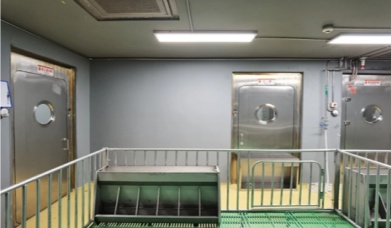
Key Design Features Buyers Should Look For
From a project standpoint, we recommend evaluating a Biosafety Air Tight Door across five dimensions:
1 Sealing performance and repeatability
Gasket durability and compression recovery
Consistent sealing after thousands of cycles
Leak-rate expectations aligned with the facility’s HVAC and pressure targets
2 Structural rigidity
3 Human factors and daily use
Smooth closing behavior (not “slam” dependent)
Ergonomic hardware
Clear status indication (locked/unlocked, interlock state)
4 Integration with facility systems
5 Cleanability and material compatibility
Selection Checklist for a Biosafety Air Tight Door
Use this as a starting point when preparing your RFQ/spec:
Question to confirm | Why it matters |
What biosafety level or containment intent is required | Determines boundary rigor and verification expectations |
What pressure differential and monitoring strategy is planned | Door seal must support stable gradients |
Is this a single barrier door or part of an airlock/anteroom | Determines interlock and control requirements |
Expected traffic frequency (cycles/day) | Impacts closer, gasket life, hinge selection |
Chemical/disinfectant exposure | Drives material selection and gasket compatibility |
Fire/safety and egress requirements | Ensures compliance without compromising containment |
Cleaning protocol and surface expectations | Prevents premature corrosion or hygiene issues |
Installation and Commissioning Tips That Prevent Rework
In many projects, door performance issues come from installation details rather than the door design itself.
Frame alignment and wall interface sealing
Even the best door will leak if the frame-to-wall interface is not properly sealed, or if the frame is twisted during installation.
Verify closing force and gasket compression
Too little compression causes leakage; too much can shorten gasket life and make operation difficult.
Airlock interlock testing
If used in an anteroom airlock, test all “real-world” conditions:
Commissioning with pressure monitoring
Because containment relies on pressure gradients, commissioning often includes verifying door/room behavior under HVAC control—especially for higher-containment labs.
Final Thoughts
A Biosafety Air Tight Door is used to help a facility maintain containment integrity, especially where pressure differentials, directional airflow, and controlled transitions are essential to biosafety performance. It supports the practical realities of high-containment operations: doors open frequently, people move quickly, and HVAC systems must keep stable gradients despite disturbance. That is why an airtight door must be more than “well-sealed”—it must be repeatable, robust, cleanable, and integrable with airlock controls and monitoring where needed. Many BSL-3 facility references emphasize controlled access through self-closing door sequences and maintaining negative pressure at barrier boundaries—doors are a key part of making that strategy reliable in daily use.
At Shanghai Qualia Biotechnology Co., Ltd., we support biosafety and containment projects by providing door solutions that prioritize sealing stability, operational reliability, and practical integration with real facilities. If you’re planning a new build, upgrade, or commissioning project and want to confirm the right door configuration for your zoning and pressure strategy, you’re welcome to contact us for more information and application guidance.
FAQ
1) What is a Biosafety Air Tight Door used for in a laboratory
A Biosafety Air Tight Door is used to support containment by reducing air leakage, helping maintain pressure differentials, and improving control of airflow between biosafety zones.
2) Is a Biosafety Air Tight Door required for BSL-3 labs
Many BSL-3 facility concepts emphasize barrier separation, self-closing door sequences, and maintaining negative pressure at boundaries; airtight door performance is often part of meeting those containment goals.
3) What is the difference between a cleanroom door and a Biosafety Air Tight Door
Cleanroom doors primarily focus on cleanability and particle control, while Biosafety Air Tight Doors focus on containment boundary performance, pressure integrity, and often airlock/interlock integration.
4) How do I know if my Biosafety Air Tight Door needs maintenance
Warning signs include visible gasket damage, harder closing/latching, increased drafts/leakage, interlock faults (if used), or drifting pressure stability near the doorway during operation.


