1. Introduction
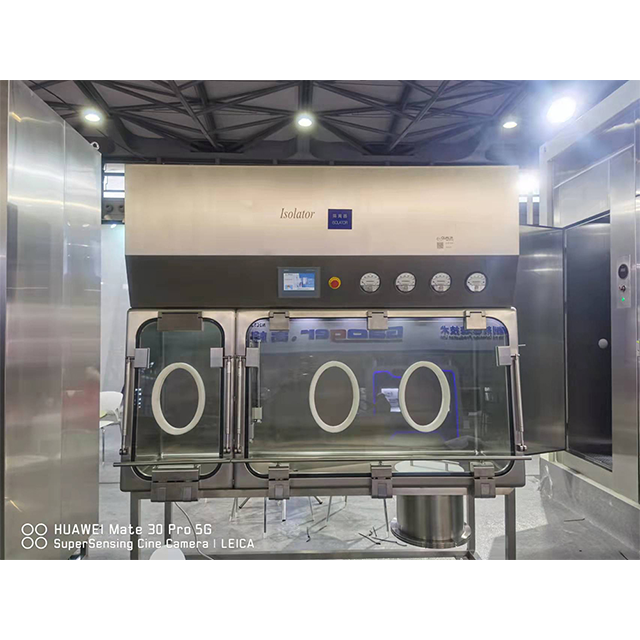
In API manufacturing, the safety of both personnel and products is crucial. Isolators play a key role in maintaining this safety by providing controlled environments. These systems protect workers from hazardous substances and prevent contamination of products. In this article, you will learn about the critical role of isolators in API manufacturing, their benefits, and best practices for their use.
2. What are Isolators in API Manufacturing?
Definition and Purpose of Isolators
Isolators are sealed environments used in pharmaceutical manufacturing to isolate a product or process from the surrounding environment, thereby protecting both the product and personnel from contamination. These systems are highly effective in handling hazardous materials, ensuring that operators and the production environment remain untouched by potentially harmful substances.
The primary purpose of an isolator is to provide a sterile and controlled environment, where hazardous substances or high-potency APIs can be handled safely without the risk of contamination. Unlike other containment methods, isolators offer a much higher level of protection for both personnel and products.
Key Components of an Isolator
Isolators are equipped with several key components to ensure a sterile and controlled environment. Here are the main features:
Component | Function |
Glove Ports | Allow operators to manipulate materials inside without direct contact. |
Air Filtration System | Ensures incoming air is free from contaminants, maintaining sterility. |
Robotic Arms/Manipulators | Minimize human interaction with hazardous substances, reducing exposure. |
Seals and Gaskets | Maintain the integrity of the isolator by preventing leaks. |
These components work in tandem to create an environment where contamination is minimized, and safety is maximized.
How Isolators Differ from Other Containment Solutions
Unlike clean rooms or biological safety cabinets, isolators offer a more enclosed and controlled environment. While clean rooms maintain a clean environment, isolators are designed to isolate the entire process. They provide a physical barrier that not only protects against contamination but also maintains precise conditions, such as humidity and temperature, which is critical in the manufacture of APIs.
Isolators also provide a higher degree of containment, making them essential in the production of high-potency drugs or sterile pharmaceuticals.
3. The Critical Role of Isolators in Protecting Personnel
3.1 Preventing Exposure to Hazardous Substances
One of the primary roles of isolators is to protect personnel from exposure to hazardous substances. In API manufacturing, many compounds are toxic, carcinogenic, or have other dangerous properties. Isolators provide a physical barrier that prevents direct contact between workers and dangerous substances.
The isolators' airflow and filtration systems are crucial in this regard. They create negative pressure environments, ensuring that any particles or aerosols generated within the isolator are contained and filtered before being released into the surroundings. This prevents contamination of the production area and the risk of exposure to personnel.
Feature | Benefit |
Negative Pressure | Ensures that any released particles are contained within the isolator. |
HEPA Filtration | Filters out harmful particles and aerosols, reducing the risk of contamination. |
These mechanisms work together to provide a safe working environment while handling hazardous compounds.
3.2 Reducing the Risk of Cross-Contamination
Cross-contamination is a significant concern in API manufacturing, especially when working with multiple drugs or batches. Isolators are designed to minimize the risk of contamination between different products. By maintaining a separate environment for each production process, isolators ensure that residues from one product do not contaminate another.
The airflow systems and isolated chambers within the isolator play a crucial role in preventing the mixing of substances, which could otherwise lead to serious product quality issues.
3.3 Enhancing Occupational Safety
Isolators also enhance occupational safety by limiting human exposure to toxic materials. The use of glove ports, robotic arms, and automated systems allows operators to handle materials without direct contact. This reduces the risk of accidental exposure and ensures that the manufacturing process is safe for workers.
In addition, the ability to operate isolators remotely, using automated systems and robotic arms, minimizes the need for human intervention in hazardous environments, further reducing risks to personnel.
4. The Role of Isolators in Product Protection
4.1 Maintaining Product Quality and Integrity
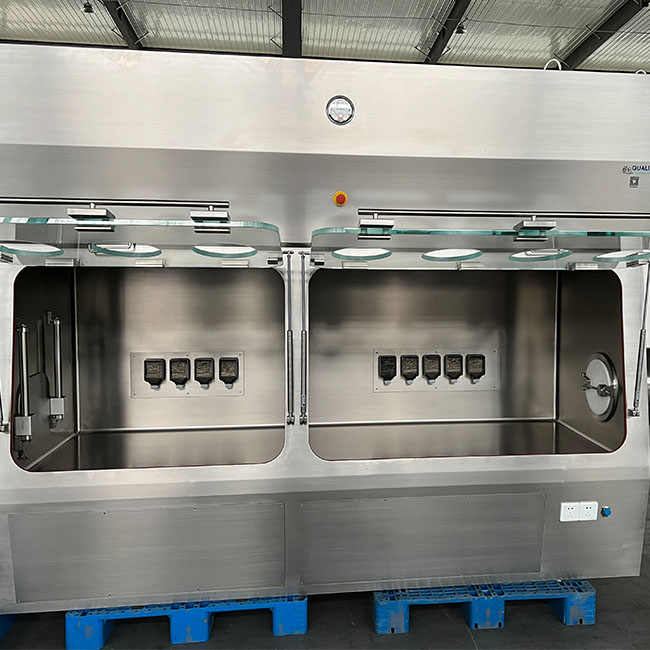
In API manufacturing, maintaining the sterility and purity of products is crucial. Isolators ensure that external contaminants such as bacteria, dust, or other particles do not compromise the quality of the drug being produced. The sealed environment of an isolator, coupled with its air filtration systems, provides the ideal conditions for preserving the integrity of the product.
Isolators help prevent contamination during sensitive stages of production, such as during the preparation, handling, and packaging of high-potency APIs. This is especially critical in the production of sterile APIs, where even minor contamination can have significant consequences for patient safety.
4.2 Preventing Contamination from External Elements
External contaminants, such as dust, microorganisms, and other environmental factors, can compromise the quality of APIs. Isolators block these contaminants through a combination of physical barriers and filtration systems. This ensures that the product remains pure and free from outside influences that could alter its composition or safety.
External Contaminant | How Isolators Block It |
Dust | Air filtration systems trap dust particles. |
Microorganisms | Sealed environments prevent microorganisms from entering. |
Particles and Vapors | Negative pressure and air circulation prevent particle buildup. |
The environmental control features in isolators—such as humidity, temperature, and airflow regulation—also play a key role in maintaining the optimal conditions for API production.
4.3 Compliance with Regulatory Standards
Isolators play a crucial role in helping manufacturers meet Good Manufacturing Practices (GMP) and other regulatory requirements. Agencies like the FDA and EMA set strict guidelines for the production of pharmaceuticals, ensuring that products are safe, effective, and of the highest quality.
Isolators help pharmaceutical companies stay compliant with these standards by providing a controlled environment that reduces the risk of contamination and ensures product quality. They also facilitate the maintenance of detailed records for traceability during the manufacturing process.
Notes: Regulatory agencies like the FDA mandate the use of isolators for high-potency drug production to ensure worker safety and product integrity. Failure to comply could lead to costly recalls or delays.
5. Types of Isolators Used in API Manufacturing
5.1 Closed Isolators
Closed isolators are fully sealed systems used to create a negative pressure environment. These are typically used for handling highly potent or hazardous materials. Their main advantage is their high level of containment, which provides maximum protection for both personnel and the product.
Feature | Advantage |
Sealed System | Provides high containment, ideal for toxic or sterile drug production. |
Negative Pressure | Keeps potentially harmful particles inside the isolator, preventing contamination. |
Applications: Closed isolators are ideal for processes like sterile drug manufacturing, where contamination risk is high.
5.2 Open Isolators
Open isolators are used in less critical applications where a partial level of containment is sufficient. While they offer protection from external contaminants, they are not as robust as closed isolators.
Key Differences: Open isolators allow more flexibility for operators and are used in less hazardous environments, such as handling less potent substances.
5.3 Gloveboxes and RABs (Restricted Access Barrier Systems)
Gloveboxes and RAB systems are specialized isolators that allow operators to handle materials without direct contact. These systems are equipped with gloves embedded into the walls of the isolator, allowing workers to manipulate materials safely.
Technology | Use Case |
Gloveboxes | Used for handling high-potency drugs with minimal exposure to workers. |
RAB Systems | Ideal for both sterile and hazardous drug production, allowing remote operations. |
Technological Features: These systems often feature advanced airflow management, integrated safety systems, and remote monitoring capabilities, making them ideal for high-precision operations.
6. Best Practices for Using Isolators in API Manufacturing
6.1 Proper Installation and Setup
For isolators to function properly, they must be correctly installed and set up. This includes ensuring leak-proof seals, proper calibration of airflow systems, and verifying that the isolator is fully contained. Installation should be carried out by experienced professionals, and a comprehensive testing protocol should be followed.
Step | Action |
Leak Testing | Conduct tests to ensure that the isolator maintains a sealed environment. |
Airflow Calibration | Ensure airflow systems are properly calibrated to maintain the correct pressure. |
Tip: Before beginning operations, always conduct leak testing and performance validation to confirm that the isolator maintains its integrity.
6.2 Regular Maintenance and Validation
To ensure continuous safe operation, isolators must undergo regular maintenance and validation. This includes routine inspections of seals, air filtration systems, and robotic arms. Preventive maintenance practices help extend the lifespan of the isolators and maintain compliance with regulatory standards.
Maintenance Task | Frequency |
Seal Inspections | Monthly or after any maintenance work. |
Air Filter Replacement | Every 6 months or based on manufacturer’s guidelines. |
Notes: Documentation of maintenance and validation activities is essential for regulatory compliance.
6.3 Employee Training and Safety Protocols
Operators need thorough training on how to safely operate isolators. They should be familiar with both standard operating procedures (SOPs) and emergency protocols in case of system failures or contamination events.
Tip: Continuous training and regular drills can significantly reduce human error and improve operational safety.
7. Innovations in Isolator Technology
Advancements in isolator technology are pushing the boundaries of what these systems can do. Automation, sensors, and smart technologies are making isolators more efficient, safer, and easier to manage.
Trends in Isolator Technology:
● IoT integration for real-time monitoring of isolator conditions.
● Remote diagnostics and monitoring to ensure constant monitoring without manual intervention.
● Automated systems for faster, more accurate product handling.
As these technologies continue to evolve, isolators will become even more essential in meeting the growing demands for efficiency and safety in pharmaceutical manufacturing.
8. Conclusion
Isolators play a crucial role in protecting both personnel and products in API manufacturing. By creating a controlled, isolated environment, they prevent contamination and ensure the safety of workers handling hazardous materials. Additionally, they preserve the integrity of API products, meeting strict regulatory standards and maintaining high-quality outcomes.Incorporating isolators into pharmaceutical manufacturing best practices is vital for safety, product quality, and compliance. As technology advances, isolators will remain indispensable in meeting the evolving needs of the pharmaceutical industry.
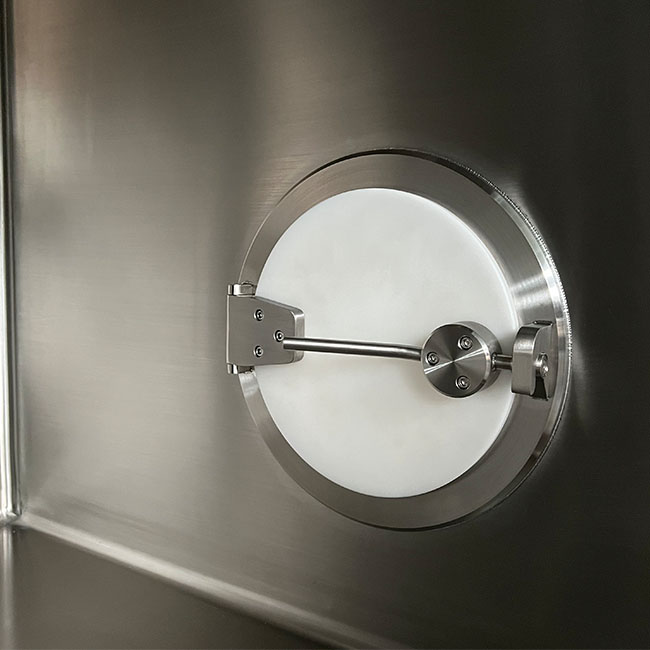
Qualia's Isolator technology provides a secure, contaminant-free workspace for critical processes in pharmaceutical manufacturing and research. Designed for ergonomic use, these isolators adhere to stringent biosafety standards.
FAQ
Q: What is an isolator in API manufacturing?
A: An isolator in API manufacturing is a sealed environment that prevents contamination by isolating the product and the personnel from external hazards, ensuring a controlled and safe manufacturing process.
Q: How do isolators protect personnel in API manufacturing?
A: Isolators protect personnel by providing a barrier that prevents exposure to hazardous substances, utilizing negative pressure, air filtration systems, and glove ports to safely handle materials without direct contact.
Q: Why are isolators important in maintaining product quality?
A: Isolators maintain product quality by preventing contamination from external elements like dust and microorganisms, ensuring sterility, and maintaining optimal environmental conditions during the production of APIs.
Q: What are the benefits of using isolators in API manufacturing?
A: The benefits of using isolators include enhanced safety for personnel, protection against cross-contamination, compliance with regulatory standards, and the preservation of product integrity during the manufacturing process.


