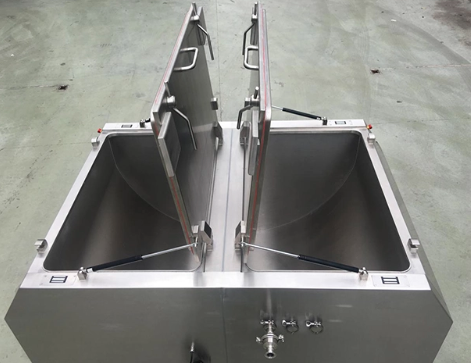
Laboratories handle potentially dangerous microbes every day, making contamination prevention critical. The dunk tank provides an immersion-based solution that treats every surface of lab equipment with sterilant. This ensures thorough decontamination, protecting researchers, instruments, and the surrounding environment simultaneously. High-containment facilities, including BSL-3+ labs, increasingly rely on the dunk tank to maintain strict safety standards while improving workflow efficiency.
Beyond simple instruments, the dunk tank accommodates complex laboratory items—glassware, sensitive sensors, and delicate devices—reducing manual cleaning steps that are often repetitive and time-consuming. For labs working with high-risk pathogens, it delivers a reliable, repeatable method that enhances safety without slowing critical research.
What is a Qualia Dunk Tank?
The Qualia Dunk Tank is an advanced decontamination system for laboratory equipment. Unlike traditional surface sprays, it fully immerses items in sterilant solution, guaranteeing complete coverage, including hard-to-reach crevices. It is designed for both efficiency and biosafety.
Key Components
Tank body: Made of corrosion-resistant metals or chemical-resistant polymers, with smooth surfaces for easy cleaning.
Control system: Automated timers, circulation pumps, and temperature regulation maintain consistent sterilization conditions.
Safety features: Emergency interlocks, overflow alarms, and monitoring systems protect personnel and prevent accidents.
Optional sensors: Measure sterilant concentration, ensuring correct chemical exposure throughout the cycle.
How It Works
Lab items enter the tank through a controlled, sealed hatch.
The system fully immerses equipment in sterilant solution.
Circulation ensures even contact on all surfaces.
Items exit the tank fully decontaminated, dry, and ready for use.
This system works for metals, plastics, glass, and certain sensitive electronics, allowing labs to handle a variety of equipment safely. Some models even allow programmable cycles based on the pathogen risk or item type.
Benefits of Using the Qualia Dunk Tank
Enhanced Sterilization Coverage
The Qualia Dunk Tank ensures that sterilant reaches every surface of laboratory equipment. By fully immersing items, it significantly reduces the chance of missing hidden corners, cracks, or joints that can harbor pathogens. This feature is especially valuable for equipment with complex shapes, multiple components, or hard-to-reach areas, providing a level of sterilization consistency that manual cleaning or surface sprays cannot achieve.
Reduced Cross-Contamination
During the sterilization process, each item is fully isolated inside the tank, which minimizes unnecessary handling and the risk of accidental contamination. Fewer touch points mean that pathogens are less likely to transfer from one object to another. This system supports strict biosafety protocols and ensures that laboratory operations maintain a high standard of hygiene, which is essential for both routine work and high-risk experiments.
Works in High-Risk Labs
The Qualia Dunk Tank is highly effective for laboratories that manage BSL-2, BSL-3, and BSL-3+ pathogens. It is capable of neutralizing a wide range of biological agents, from common bacteria and viruses to more resilient spores. The tank works in harmony with primary containment systems, such as biosafety cabinets and negative pressure rooms, forming an integrated approach to maintaining a safe and controlled laboratory environment for high-risk research.
Safety for Laboratory Personnel
By reducing the need for direct contact with hazardous agents, the dunk tank enhances personnel safety in the laboratory. It integrates smoothly with existing PPE protocols and standard operating procedures, preventing exposure during transport, preparation, or cleaning tasks. Researchers can focus more on their experiments instead of spending time on labor-intensive manual decontamination, reducing stress and the potential for human error, and contributing to a safer, more efficient workflow.
How the Qualia Dunk Tank Fits in Laboratory Safety Protocols
Alignment with Biosafety Levels
Dunk tanks are not a replacement for existing safety measures—they complement them. In BSL-3+ labs, they add a secondary layer of containment for instruments. They work alongside:
This combination reduces overall risk of accidental pathogen escape.
Standard Operating Procedures (SOPs)
Load equipment carefully to avoid damage or splash-back.
Use cycles tailored to pathogen type and sterilant chemical.
Dispose or neutralize spent sterilant following regulations.
Record sterilization logs for compliance and auditing purposes.
Emergency and Contingency
Automated shutoff prevents overflows or spills.
Redundant sterilization systems ensure backup if power fails.
Sensors detect leaks, overfill, or low sterilant levels, alerting staff immediately.
These safety measures are essential in high-containment labs where even minor mistakes can have serious consequences.
Technical Features of the Qualia Dunk Tank
| Feature | Description | Benefit |
| Automation & Controls | Timed cycles, circulation, temperature | Consistent sterilization, fewer human errors |
| Safety Interlocks | Emergency stop, alarms | Prevents accidents, chemical exposure |
| Tank Material | Corrosion-resistant metals, smooth polymer | Easy to clean, long-lasting |
| Sterilant Management | Sensors, automated refill | Maintains correct sterilant concentration |
| Remote Monitoring | Digital display, optional software integration | Track cycles, prevent failures |
These features make it a versatile, reliable solution for modern labs that prioritize safety and efficiency.
Best Practices for Implementing a Qualia Dunk Tank
Choosing the Right Tank
Selecting the proper Qualia Dunk Tank is critical for effective sterilization. It is important to match the tank size to the volume and types of laboratory equipment being used, ensuring all items fit comfortably for full immersion. Compatibility between the chosen sterilant and the pathogens handled in your lab must be verified, as different biological agents require specific chemical or heat treatments. Modern tanks may also include digital monitoring or automated systems, which help track immersion cycles, temperature, and sterilant concentration, making the sterilization process more reliable and easier to manage.
Integration Into Lab Protocols
Proper placement and workflow integration of the dunk tank enhances laboratory safety and efficiency. Tanks should be positioned close to entry or exit zones for contaminated materials, minimizing transport of hazardous items across the lab. Immersion cycles should be scheduled in coordination with daily lab operations to prevent workflow disruptions. Staff must be thoroughly trained on correct handling procedures, including safe loading and unloading of equipment, to avoid accidental exposure and ensure consistent sterilization outcomes.
Maintenance Tips
Routine maintenance of the Qualia Dunk Tank is essential for optimal performance and safety. The tank should be inspected regularly for leaks, corrosion, or mechanical damage, as even small defects can compromise containment. Sterilant levels must be monitored closely, and spent or diluted chemicals should be replaced or neutralized promptly. Tank surfaces need frequent cleaning to prevent residue buildup that could reduce sterilization effectiveness. Periodic validation of sterilization cycles ensures that the tank continues to meet biosafety standards and provides reliable results for high-risk laboratory operations.
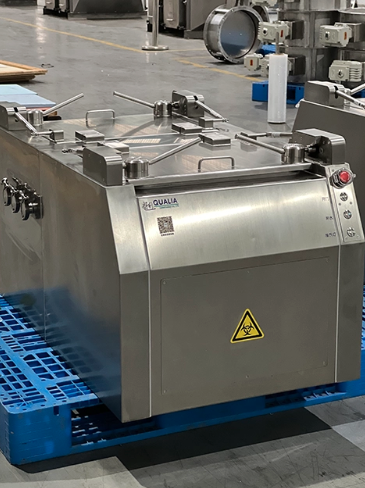
Integration with Laboratory Safety Strategy
Secondary Containment Layer
The Qualia Dunk Tank adds an extra layer of containment for lab equipment. It complements primary systems like negative pressure rooms, biosafety cabinets, and autoclaves, reducing overall exposure risk.
Workflow Optimization
Placing the tank near entry or exit zones for contaminated materials minimizes the movement of hazardous items across the lab. This reduces potential contamination and streamlines decontamination steps.
SOP Integration
Standard operating procedures can incorporate the dunk tank as a key step. Staff follow a clear sequence: contaminated zone → dunk tank → clean zone. This ensures full sterilization before instruments leave containment areas.
Visual Aids for Compliance
Workflow diagrams, checklists, or signage can help staff understand proper tank use. Clear visuals reinforce compliance and improve efficiency in high-containment labs.
Technological Innovations and Future Trends
Automation and Monitoring
Modern dunk tanks use timed cycles, circulation pumps, and temperature controls for consistent sterilization. Sensors track sterilant concentration and immersion conditions in real time, reducing human error.
Adaptive Sterilization
Some tanks can adjust cycles based on pathogen type or equipment sensitivity. This ensures thorough sterilization even for resistant microorganisms or complex instruments.
Integration with Lab Systems
Future trends include AI-assisted monitoring and connection with LIMS platforms. This allows automatic logging of sterilization events, real-time alerts, and improved compliance documentation.
Preparing for Emerging Threats
Advanced dunk tank features help labs respond to new biological hazards. By combining automation, monitoring, and adaptive cycles, facilities can maintain safety while handling increasingly complex pathogens and equipment types.
Frequently Asked Questions
How does the Qualia Dunk Tank improve lab safety?
It fully immerses equipment in sterilant, reducing direct contact with pathogens and minimizing the risk of cross-contamination during handling.
How often should the sterilant be replaced or monitored?
Sterilant levels should be checked regularly, and spent or diluted solutions must be replaced or neutralized according to laboratory SOPs and safety regulations.
Does the dunk tank integrate with existing laboratory protocols?
Yes, it complements current biosafety measures, fits into standard operating procedures, and can be positioned to optimize workflow without disrupting experiments.
Are there automation features available in Qualia Dunk Tanks?
Many models include timers, circulation pumps, temperature controls, and sensors for sterilant concentration, which ensure consistent sterilization and reduce human error.
What maintenance is required for a Qualia Dunk Tank?
Routine maintenance includes inspecting the tank for leaks or corrosion, cleaning surfaces, validating sterilization cycles, and monitoring sterilant levels to maintain efficiency and safety.
Conclusion
The Qualia Dunk Tank transforms laboratory sterilization by providing thorough, reliable, and safe decontamination for complex equipment. Its immersion-based design reduces cross-contamination, supports high-risk pathogen handling, and streamlines lab workflows. By integrating automation, monitoring, and adaptive sterilization cycles, it ensures consistent safety without slowing research.
For laboratories aiming to elevate their biosafety standards, Shanghai Qualia Biotechnology Co., Ltd. offers advanced Qualia Dunk Tank solutions tailored to meet diverse operational needs. Their commitment to innovation and quality makes them a trusted partner for high-containment facilities seeking efficiency, safety, and peace of mind in every decontamination process.


