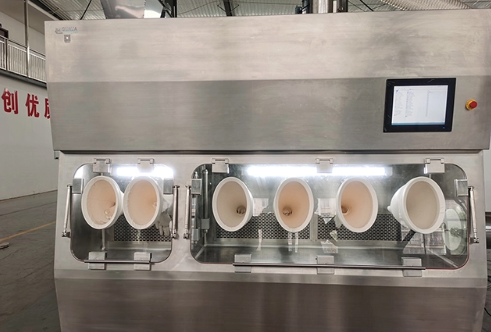
In modern pharmaceutical, biotechnology, and medical device manufacturing, contamination is a major concern. Even minor impurities can compromise product quality, delay production, or endanger operators. Qualia’s isolator technology offers a reliable solution by creating fully controlled environments for handling sensitive substances safely. These isolators combine airtight chambers, HEPA/ULPA filtration, precise pressure control, and automation to protect both operators and products. By maintaining sterile conditions during aseptic compounding, sterility testing, and production of potent APIs, Qualia isolators not only enhance biosafety but also improve workflow efficiency, ensuring compliance with strict industry regulations.
Operators can work confidently, knowing that every material transfer, process step, and microbial control measure is supported by advanced isolator systems. This level of control is critical in high-stakes environments where product integrity and personnel safety cannot be compromised. From reducing contamination risk to optimizing production throughput, isolators have become indispensable in modern cleanroom and laboratory operations.
What is Isolator Technology and Why It Matters
An isolator is an engineered enclosure designed to separate materials or processes from the external environment. Its main purpose is contamination prevention, protecting both operators and products.
How It Works
Closed system design: All activities occur inside a hermetically sealed chamber, eliminating direct contact between operator and product.
HEPA or ULPA filtration: Removes particulate matter, microbes, and airborne contaminants, ensuring a sterile internal atmosphere.
Pressure control: Positive pressure isolates products from ambient contamination, while negative pressure prevents hazardous materials from escaping.
Real-time monitoring: Environmental parameters like temperature, humidity, and microbial levels are continuously tracked.
Glovebox vs Isolator
| Feature | Glovebox | Isolator |
| Operator protection | Physical barrier | Barrier plus HEPA/ULPA filtered airflow |
| Air control | Limited | Positive/negative pressure with airflow regulation |
| Contamination control | Basic | Advanced, meets USP <797>/<800>, ISO 14644-1 standards |
| Applications | Sensitive or inert materials | Sterile drugs, potent APIs, toxic substances |
Gloveboxes protect operators and materials, but isolators provide higher sterility assurance, advanced airflow control, and integrated decontamination. This makes isolators indispensable in pharmaceutical and biotech environments.
Key Features of Qualia’s Isolators
Closed System Design for Maximum Safety
The isolator forms a fully enclosed workspace. Operators interact with materials exclusively through gloves, sleeves, or robotic manipulators. This design eliminates exposure to harmful substances and reduces the risk of airborne contamination. By maintaining a hermetically sealed environment, it ensures that potent APIs, sterile drugs, or sensitive biological materials are fully protected during handling.
HEPA and ULPA Filtration for Contamination Control
High-efficiency air filtration is critical in isolator technology. HEPA or ULPA filters remove particles as small as 0.3 microns, including bacteria, spores, and viruses. Laminar airflow within the isolator maintains a unidirectional, low-turbulence environment, preventing cross-contamination during critical operations like sterile filling, microbial testing, or cell culture.
Integrated Transfer Chambers
Material transfer is often a weak point for contamination. Qualia isolators use transfer chambers to move materials safely in and out. Bag-in/bag-out processes allow handling of potent substances without risk. Transfer chambers also improve workflow efficiency, allowing faster, controlled material movement while maintaining a sterile environment.
Modular and Flexible Design
Qualia isolators are modular. They can be resized, reconfigured, or equipped with automation systems depending on production needs. Modular designs allow facilities to integrate multiple workflows, reducing downtime and maximizing workspace utilization. On-site assembly also reduces transport constraints for large units.
Real-Time Monitoring and Control Systems
Modern isolators include sensors and integrated control systems. They track pressure, temperature, humidity, and microbial levels continuously. Real-time alerts notify operators if conditions deviate from pre-set standards. Data logging and audit trails ensure cGMP compliance, traceability, and simplified reporting for regulatory inspections.
How Qualia’s Isolator Technology Enhances Biosafety
Operator Protection and Hazard Containment
Negative pressure isolators ensure hazardous materials never leave the containment area. Operators safely handle highly potent APIs, cytotoxic compounds, or biohazardous agents without risk of exposure. Protective features, including automatic negative pressure maintenance during glove breaches, reinforce operator safety.
Maintaining Sterile Environments
Positive pressure isolators create a sterile bubble, keeping contaminants out. They are essential for sterile drug preparation, microbiological testing, and cell culture. HEPA filtration combined with laminar airflow ensures ISO 5/Class A cleanroom-level sterility inside the isolator.
Minimizing Human Error and Cross-Contamination
By combining automation, glove interventions, and controlled airflow, isolators reduce human contact points. Cross-contamination risks decrease, and workflow efficiency improves. Regulatory standards, such as USP <797>/<800> for sterile compounding and ISO 14644 cleanroom classifications, are more easily maintained.
Improving Workflow Efficiency with Qualia Isolators
Streamlined Material Handling
Transfer chambers and modular layouts allow materials to move quickly without breaking containment. Production lines stay continuous, improving output and reducing bottlenecks.
Modular Layouts and On-Site Assembly
Large isolators can be built and assembled on-site. Modular systems adapt to existing cleanroom layouts, enabling multiple workflows in a single space. This flexibility shortens installation times and enhances operational scalability.
Integrated Data Management
Environmental conditions and operational parameters are tracked automatically. Data is recorded, stored, and easily retrieved for validation or regulatory reporting. Automated documentation saves time and ensures reliable traceability for every batch.

Innovations in Qualia Isolator Technology
Real-Time Monitoring with Automated Alerts
Qualia isolators now feature sophisticated real-time monitoring systems that track pressure, temperature, humidity, and particle levels continuously. Sensors detect even minor deviations from preset thresholds, triggering automated alerts to notify operators instantly. This proactive approach reduces the need for constant manual supervision and allows staff to focus on critical tasks rather than routine environmental checks. Over time, these alerts help prevent contamination events, ensuring uninterrupted sterile operations and higher product quality.
Advanced Transfer Chamber Systems
Transfer chambers in Qualia isolators are designed for both efficiency and sterility. They allow materials, tools, and samples to move in and out of the isolator without compromising the internal environment. Features such as bag-in/bag-out procedures, automated interlocks, and sterilization cycles ensure that every transfer maintains an aseptic barrier. By optimizing material flow, these advanced chambers reduce downtime between production steps, enhance workflow continuity, and minimize contamination risks.
Energy-Efficient Designs
Modern isolators integrate energy-saving technologies to reduce operational costs and environmental impact. Advanced airflow management and optimized fan systems minimize power consumption while maintaining cleanroom-grade sterility. Some designs recycle filtered air within the isolator, reducing the need for constant fresh air input. These energy-efficient solutions not only support sustainable practices but also lower long-term operational expenses without compromising safety or performance.
Full Integration with Laboratory Management Systems
Qualia isolators can be seamlessly integrated with laboratory information management systems (LIMS) or building management systems (BMS). This integration allows for automated data logging, audit trail generation, and real-time reporting. Operators can access operational metrics remotely, enabling faster decision-making and ensuring that compliance documentation is always accurate and up to date. Full integration also allows predictive maintenance, reducing unexpected downtime and supporting continuous production.
Future of Biosafety and Workflow Efficiency
Modular, Flexible Manufacturing Spaces
The future of isolator technology lies in adaptability. Modular designs allow facilities to expand, shrink, or reconfigure workflows without major structural changes. Different isolator units can be combined or relocated to meet changing production demands, from small-scale laboratory research to large-scale pharmaceutical manufacturing. This flexibility ensures that production lines remain efficient and scalable while maintaining high biosafety standards.
AI and Machine Learning for Environmental Control
Artificial intelligence and machine learning are becoming integral to next-generation isolators. These technologies predict environmental fluctuations and automatically adjust airflow, humidity, or pressure in real time. Predictive analytics help operators anticipate issues before they arise, improving sterility assurance and minimizing the risk of contamination. AI also enables optimized scheduling of decontamination cycles and resource allocation, enhancing operational efficiency.
Continuous Manufacturing Integration
Continuous manufacturing processes demand consistent environmental control. Qualia isolators provide a reliable, sterile environment that supports ongoing production without frequent shutdowns. Automated monitoring, precise pressure control, and integrated transfer systems ensure that each stage of production maintains product integrity. By reducing manual interventions, isolators help streamline continuous processes, reduce human error, and accelerate time-to-market for critical drugs.
Accelerating Sterile and High-Containment Processes
Emerging isolator technologies allow sterile and high-containment operations to run faster and more safely. High-performance filtration, advanced automation, and real-time monitoring reduce risks associated with handling potent APIs or hazardous materials. Operators can perform complex tasks confidently, knowing that the isolator provides maximum protection. This combination of safety, efficiency, and flexibility positions isolators as a cornerstone of future biopharmaceutical and biotech manufacturing environments.
FAQ
What types of pressure modes are available in Qualia isolators?
Qualia isolators operate in positive pressure to protect products from contamination and negative pressure to contain hazardous substances, depending on the application requirements.
How do transfer chambers improve workflow efficiency?
Transfer chambers allow safe material movement in and out of the isolator without breaking containment, reducing downtime and maintaining a sterile environment.
Can Qualia isolators integrate with lab management systems?
Yes, they can connect with LIMS or BMS systems, enabling automated data logging, audit trails, remote monitoring, and predictive maintenance.
Are Qualia isolators suitable for continuous manufacturing processes?
Yes, their reliable sterile environment, automated controls, and modular design support continuous production without frequent shutdowns.
How do energy-efficient designs in isolators benefit labs?
Energy-efficient airflow management and air recirculation reduce power consumption, lower operational costs, and minimize environmental impact.
Conclusion
As pharmaceutical and biotech industries continue to push for higher standards of safety, sterility, and efficiency, Qualia’s isolator technology remains at the forefront of innovation. By integrating advanced air filtration, real-time monitoring, modular designs, and energy-efficient solutions, these isolators help facilities achieve optimal biosafety while streamlining operations.
For companies seeking to enhance contamination control, workflow efficiency, and regulatory compliance, Qualia isolators offer a proven, reliable solution. Shanghai Qualia Biotechnology Co., Ltd. continues to deliver state-of-the-art isolator systems, supporting safe and productive pharmaceutical, biotechnology, and high-containment manufacturing processes worldwide.


