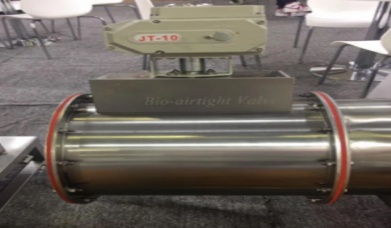
In biosafety facilities, airtight isolation is not a “nice feature”—it is the foundation that supports safe, predictable operation. Whether the system is part of an animal facility, a high-containment lab, a cleanroom interface, or a specialized exhaust and decontamination workflow, the goal is the same: air must move only where it is designed to move, and it must be controllable under normal operation and under abnormal events. In these environments, leakage is not just “inefficiency.” It can create pressure instability, compromise containment zones, and increase the workload on filtration and monitoring systems. That is why the Biosafety Sealed Valve is a critical component in many containment designs: it helps isolate sections of ducting, equipment, or process lines while maintaining a reliable airtight boundary.
From our perspective, a biosafety sealed valve is not simply a standard damper or industrial valve placed into a lab system. It is a valve engineered around sealing performance, structural integrity, repeatable closure, and verification. The “airtight” result comes from a combination of sealing surfaces, compression force, controlled actuation, and leak-testing capability. At Shanghai Qualia Biotechnology Co., Ltd., we work with customers who need practical containment hardware that can support controlled airflow, safe isolation, and stable pressure zoning. In this article, we will explain how a biosafety sealed valve works, what design features help maintain airtight isolation, and what buyers should check when specifying one for a facility project.
What is a biosafety sealed valve?
A Biosafety Sealed Valve is a valve designed to create a tight, reliable seal between two areas of a system—typically in ventilation, exhaust, containment, or processing lines. Its main purpose is to:
isolate a zone or section of ducting/piping
prevent unintended airflow or leakage
help maintain pressure differentials between rooms or modules
support safe maintenance and decontamination procedures
Depending on the facility design, these valves may be installed in:
supply or exhaust ducting
decontamination lines
isolation barriers around equipment
pressure-control interfaces in contained areas
While “valve” can mean different things in different industries, in biosafety containment the key requirement is typically airtight sealing and controllable isolation.
The core principle: a controlled compression seal
A biosafety sealed valve maintains airtight isolation through one main mechanism: controlled compression between a sealing surface and a seal material.
In basic terms:
The valve closes and positions a sealing surface into contact with a gasket or sealing ring
The valve applies a defined closing force
The gasket compresses evenly, filling micro-gaps and preventing leakage
The closed position is maintained reliably until the valve is opened again
This is different from many ordinary dampers or industrial shutoff devices that focus mainly on flow control. A biosafety sealed valve focuses on sealing integrity as a primary requirement.
Key components that help maintain airtight isolation
Different designs exist, but most biosafety sealed valves share several functional elements.
1 Valve body and rigid structure
Airtight performance requires a stable sealing geometry. If the body flexes under pressure changes or actuation force, sealing can become inconsistent. That is why the structure must be rigid and stable.
2 Sealing surface and gasket system
The sealing interface is where airtight isolation is created. The gasket material and the precision of the sealing surface influence:
compatibility with cleaning or decontamination processes
3 Actuation and closing force control
A valve may use manual operation, pneumatic actuation, or electric actuation depending on the project. What matters is that the closure force is strong and consistent enough to compress the gasket evenly.
4 Position locking and feedback
In containment environments, it is often important to confirm the valve’s position clearly. Many systems use position indicators or feedback to ensure the valve is fully closed before isolation is considered valid.
5 Leak test access and verification points
Containment systems often require verification. Some designs include ports or features that allow leak testing or validation of sealing performance during commissioning or routine checks.
How a biosafety sealed valve maintains airtight isolation in real operation
Airtight isolation is usually maintained through a sequence of system behaviors, not only the valve itself.
Step 1: Valve closes to isolate the zone
The valve is commanded to close—either manually or through automation. The closing element moves into a sealing position.
Step 2: Gasket compression creates the airtight boundary
As the sealing surface presses into the gasket, the gasket compresses and forms a continuous barrier around the valve opening.
Step 3: The system maintains pressure control
Once the valve is sealed, the facility airflow system can maintain the intended pressure zoning. Airtight isolation helps prevent unintended airflow paths that could disrupt pressure stability.
Step 4: Verification confirms sealing integrity
In controlled facilities, operators may perform checks based on facility protocol. This can include position confirmation, monitoring of pressure stability, or leak testing procedures.
Why airtight isolation matters in biosafety facilities
In containment systems, airflow is often managed through pressure differentials. The goal is to direct airflow in a predictable way and ensure that air does not leak across zones in uncontrolled patterns. Airtight isolation valves help support:
stable pressure gradients
reliable zone separation
controlled maintenance shutdown
safer filter replacement or servicing
reduced risk of cross-zone airflow disruption
A valve that seals well supports system stability. A valve that leaks can force the ventilation system to compensate continuously, which can make performance harder to manage.
Common installation locations and use scenarios
Biosafety sealed valves are often used in scenarios where isolation needs to be absolute or highly controlled.
Typical use cases
isolating sections of exhaust ducting during maintenance
controlling airflow paths during decontamination cycles
separating equipment modules in contained installations
supporting pressure boundary integrity between zones
creating service isolation for filters or monitoring points
In these scenarios, the valve is not a simple “flow adjustment” device—it is a boundary component.
Table: What makes a biosafety sealed valve different from standard valves
Feature | Biosafety Sealed Valve | Standard Industrial Valve / Damper |
Primary goal | Airtight isolation | Flow control or shutoff |
Seal design | High-focus gasket compression | Often basic sealing or non-airtight |
Verification | Often designed for validation | Not always built for leak testing |
Structural rigidity | High priority | Varies by application |
Use environment | Containment, controlled facilities | General industrial piping/ducting |
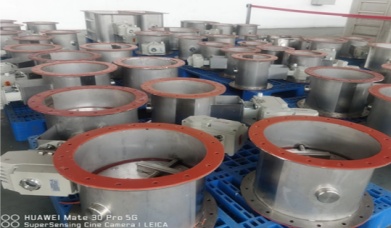
Key performance factors buyers should check
When selecting a biosafety sealed valve, buyers should focus on sealing performance and operational reliability.
1 Airtight sealing specification
A project should define acceptable leakage level or airtight requirement. In many containment projects, sealing performance must be verifiable.
2 Material compatibility
Valve body and sealing materials should match facility conditions, including cleaning or decontamination exposure.
3 Repeatable closure performance
The valve should maintain consistent sealing after repeated open/close cycles.
4 Actuator type and control logic
Manual, pneumatic, or electric actuation should be chosen based on operational needs and facility control integration.
5 Maintenance and inspection access
Containment systems often need planned inspection. Easy access helps reduce downtime.
Table: RFQ checklist for biosafety sealed valves
RFQ Item | Why It Matters |
Application location | Exhaust, supply, decon line, equipment boundary |
Airtight target | Defines sealing requirement |
Size and connection | Ensures duct/pipeline compatibility |
Actuation type | Determines control and operation style |
Seal material | Affects longevity and compatibility |
Verification method | Supports commissioning and audits |
Service access needs | Helps maintenance planning |
Common reasons airtight performance degrades
Even high-quality valves can lose sealing performance if system conditions are not managed well.
Typical causes
gasket aging or deformation over time
contamination or debris on sealing surfaces
incorrect closing force due to actuator issues
misalignment caused by installation stress
maintenance performed without proper reseating or verification
This is why periodic inspection and correct operation practice matter.
Closing thoughts
A Biosafety Sealed Valve works by using controlled closure force to compress a sealing gasket and form an airtight boundary between zones. Its sealing performance depends on rigid structure, precision sealing surfaces, gasket design, repeatable actuation, and verification capability. In biosafety facilities, this type of valve is a key isolation component that supports stable pressure zoning, controlled airflow paths, and safer maintenance and decontamination workflows. The most important point is that airtight isolation is not created by one feature—it comes from the whole sealing system working consistently over time.
At Shanghai Qualia Biotechnology Co., Ltd., we focus on practical containment components designed to support facility stability and controlled operation. If you are evaluating a Biosafety Sealed Valve for airtight isolation in a biosafety or controlled environment project, you are welcome to learn more through Shanghai Qualia Biotechnology Co., Ltd. and contact our team for technical information and configuration guidance.
FAQ
1) How does a biosafety sealed valve maintain airtight isolation?
It maintains airtight isolation by compressing a gasket evenly against a sealing surface, creating a continuous barrier that reduces leakage between zones.
2) Where are biosafety sealed valves typically used?
They are commonly used in containment ventilation ducting, exhaust isolation, decontamination workflows, and equipment boundary isolation where airtight separation is required.
3) What affects the airtight sealing performance over time?
Gasket wear, debris on sealing surfaces, incorrect actuation force, misalignment, and lack of routine inspection can all reduce sealing performance.
4) What should I include in an RFQ for a biosafety sealed valve?
Include application location, size, airtight requirement, actuation type, seal material preferences, verification needs, and maintenance access expectations.


